Tag: Displacement
-
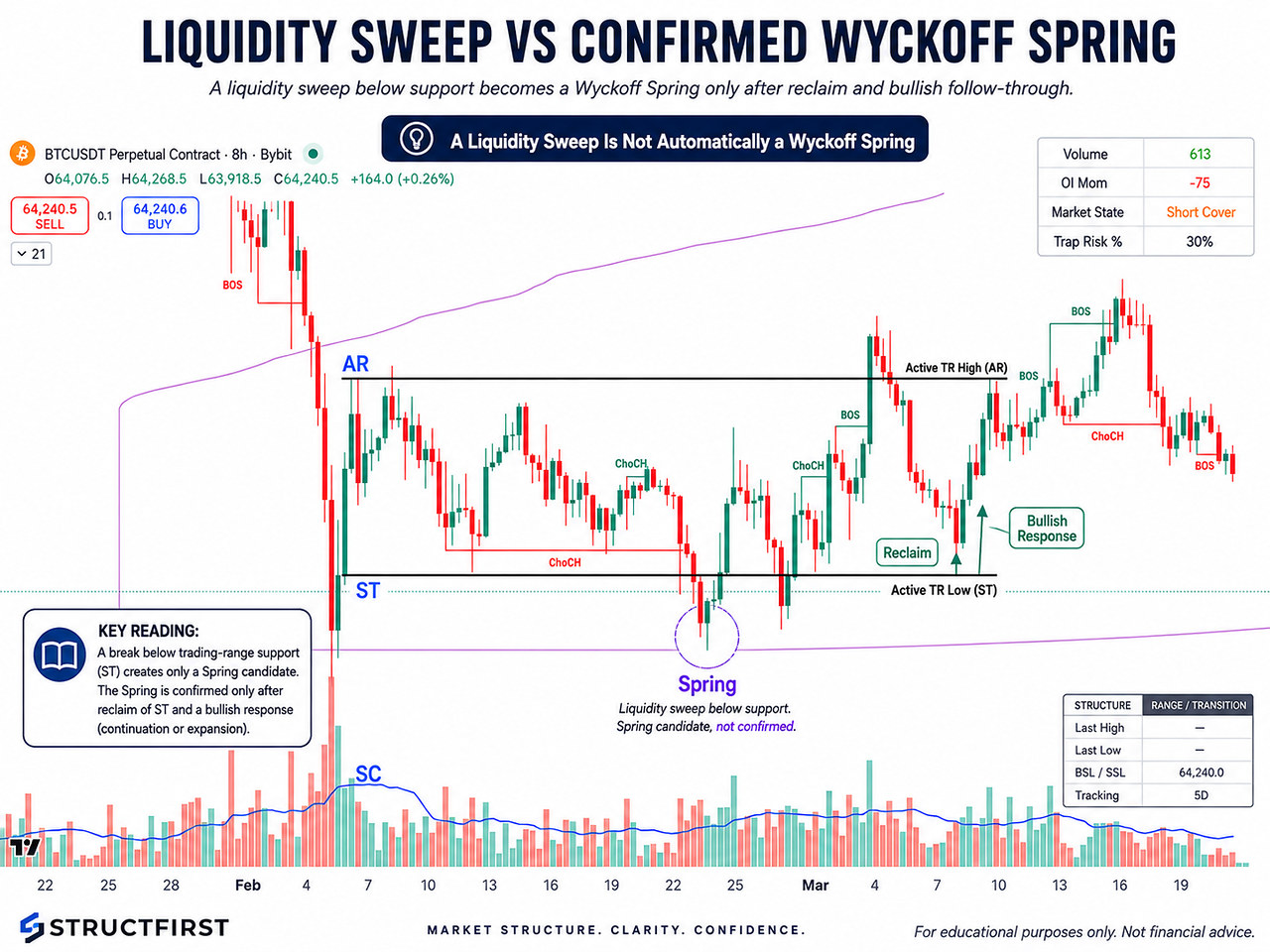
What Is a Wyckoff Spring in Trading? Why a Sweep Below Support Is Not Enough
A sweep below trading-range support creates only a Wyckoff Spring candidate. This guide explains how active support, reclaim, displacement, testing, and invalidation determine whether the setup is actionable.
-
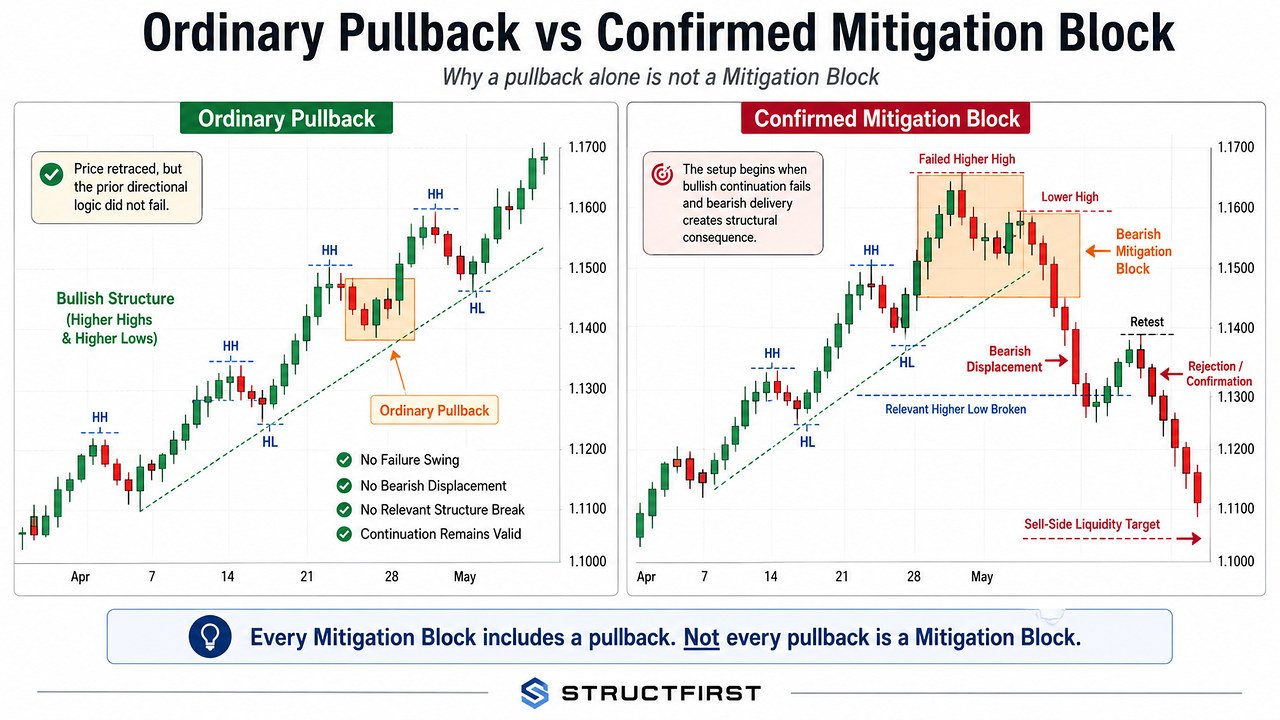
What Is a Mitigation Block in Trading? Why Every Pullback Is Not Mitigation
A Mitigation Block is not every pullback. The setup requires failure of expected swing continuation, opposite displacement, structural consequence, and confirmation during the retest.
-
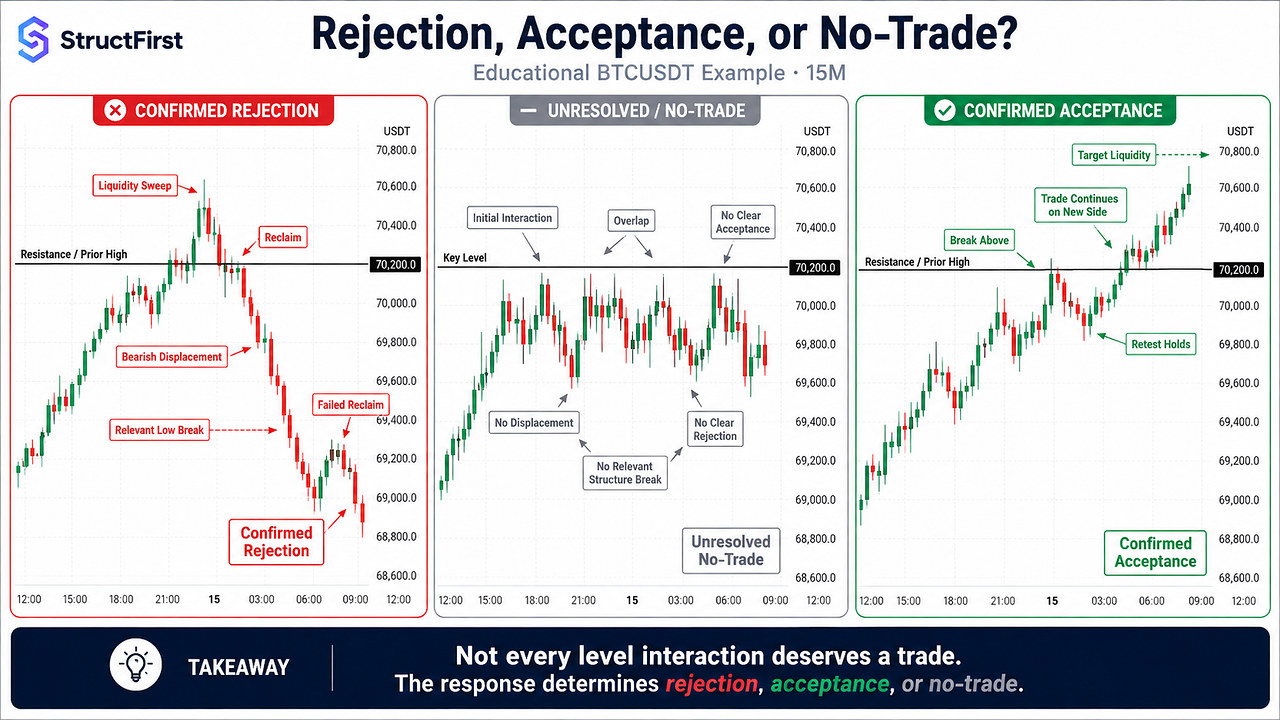
What Are Acceptance and Rejection in Trading? Why One Wick or Close Is Not Enough
A wick or one candle close does not independently confirm rejection or acceptance. Follow-through, displacement, retests, and structural consequence determine the market response.
-
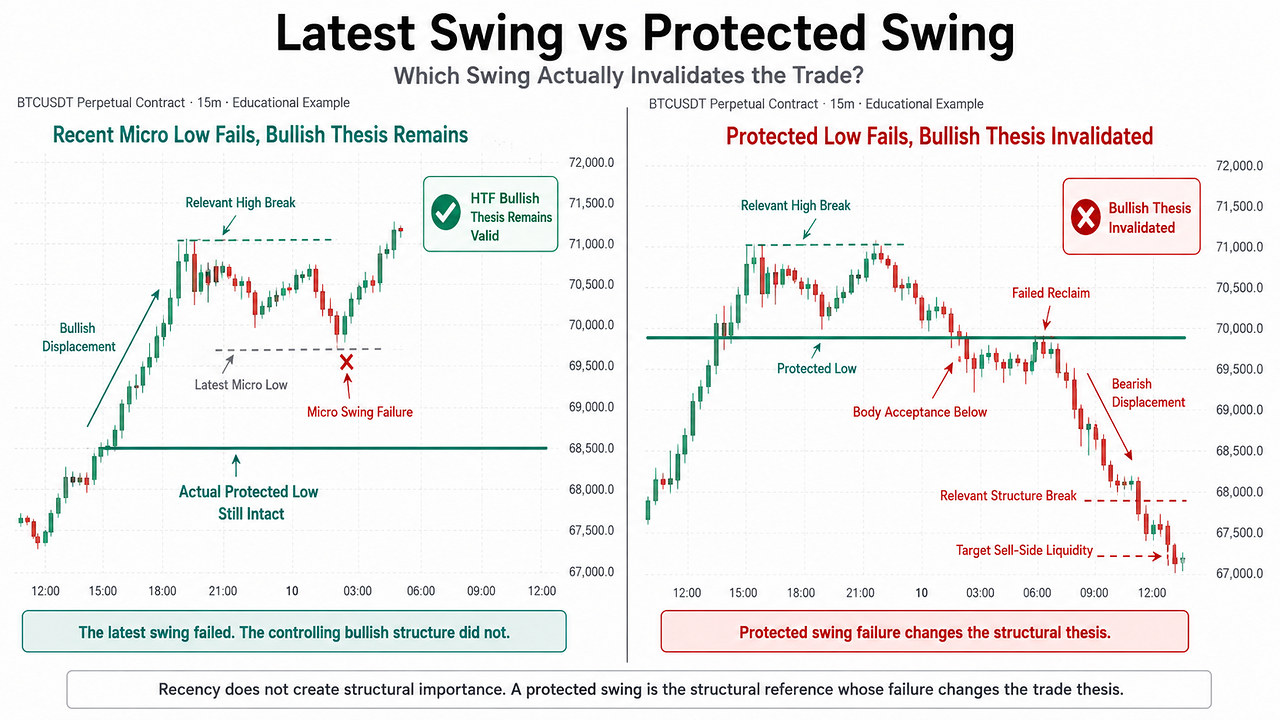
What Are Protected Highs and Lows in Trading? Which Swing Actually Invalidates the Trade?
Protected highs and lows are not simply the latest visible swings. They are structural references whose failure changes the entry model or broader trade thesis.
-
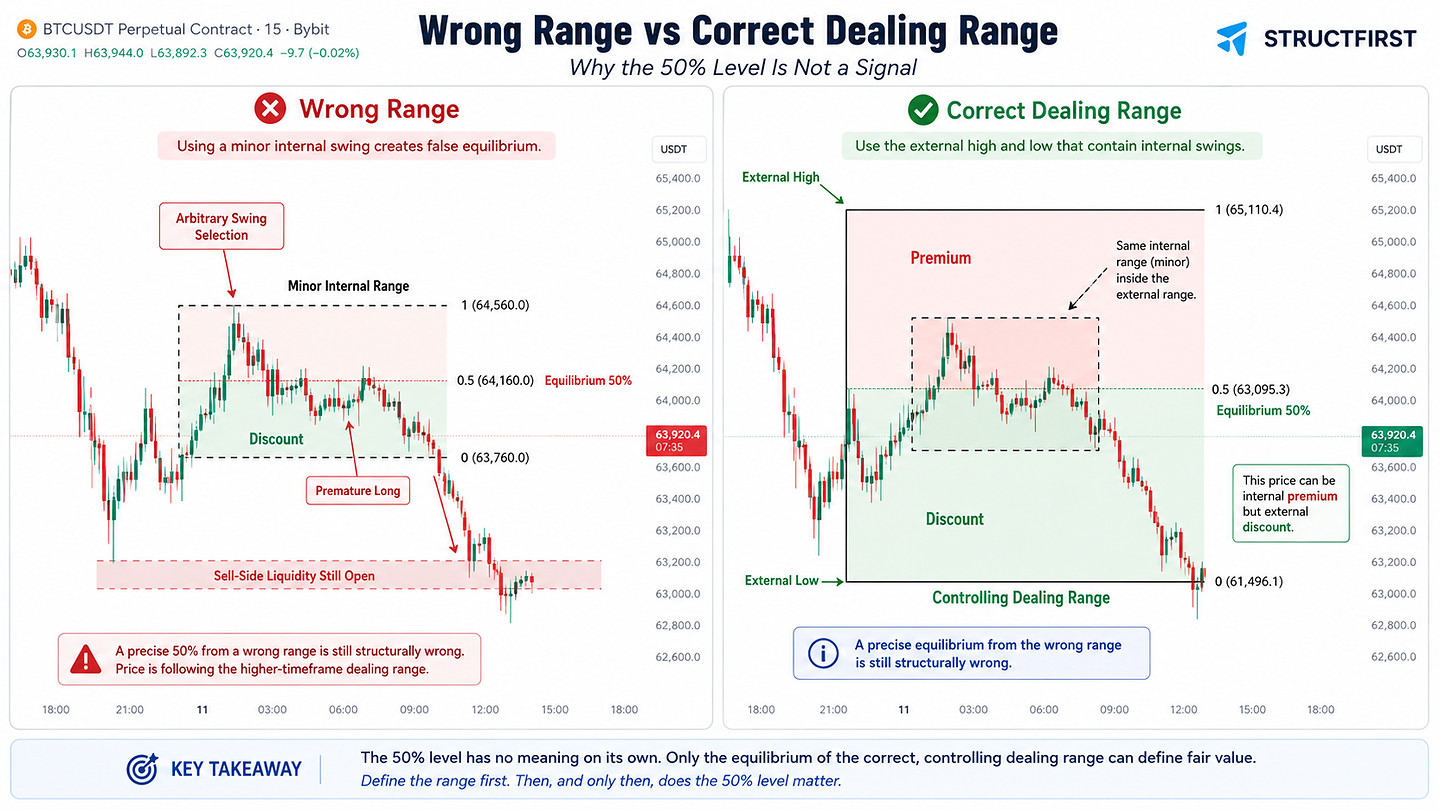
What Are Premium and Discount in Trading? Why the 50% Level Is Not a Buy or Sell Signal
Premium and Discount identify relative location inside a dealing range. The range, liquidity event, confirmation, and invalidation determine whether that location becomes tradable.
-
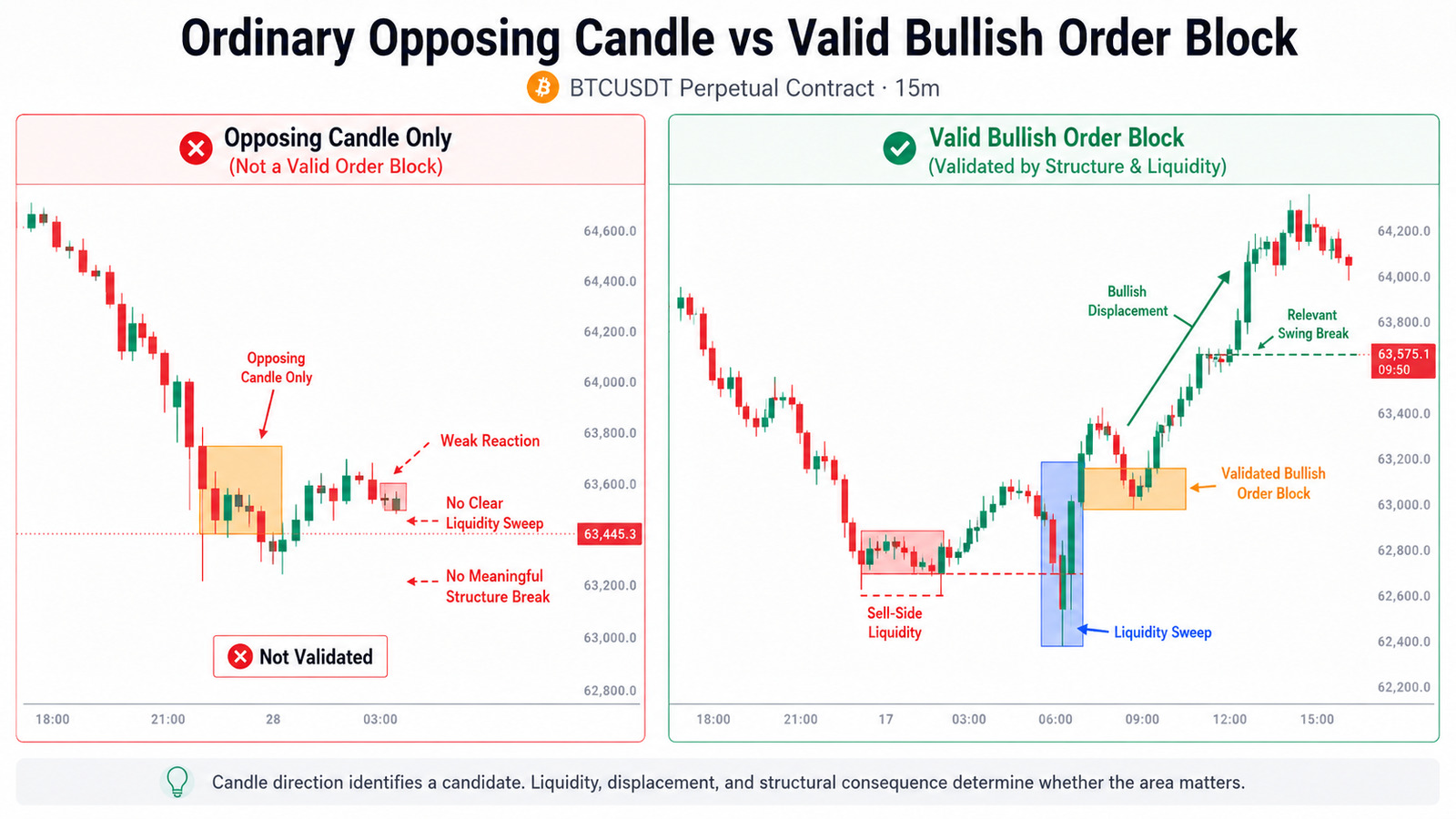
What Is an Order Block in Trading? Why the Last Opposing Candle Is Not Enough
An opposing candle becomes a relevant Order Block only when liquidity, displacement, structural consequence, mitigation, and invalidation support the zone.
-
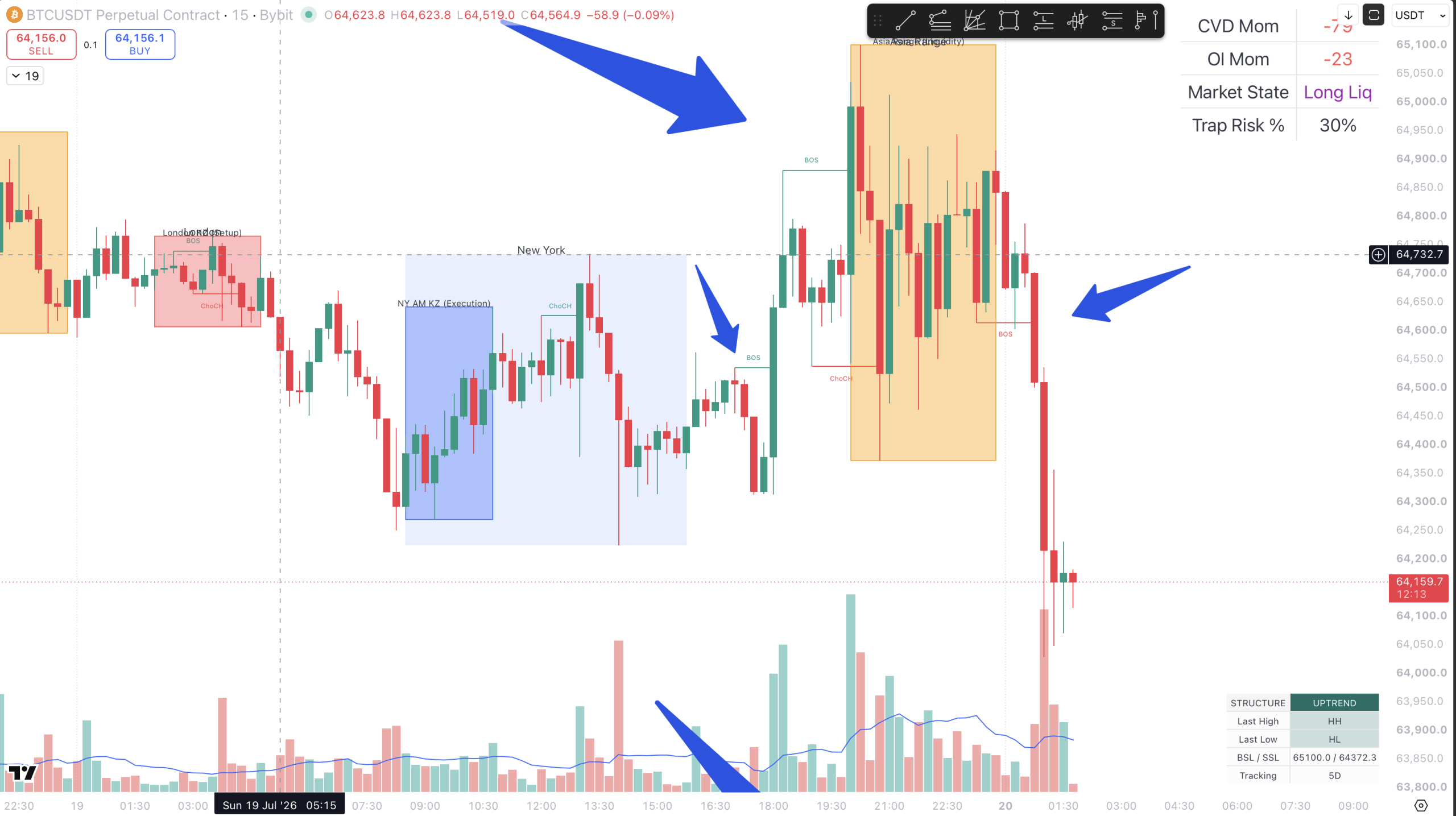
What Is Displacement in Trading? Why Strong Candles Alone Are Not Enough
Excerpt Displacement is not defined by candle size alone. This guide explains how liquidity, structural consequence, acceptance, volume, and follow-through reveal whether price is genuinely repricing.
-
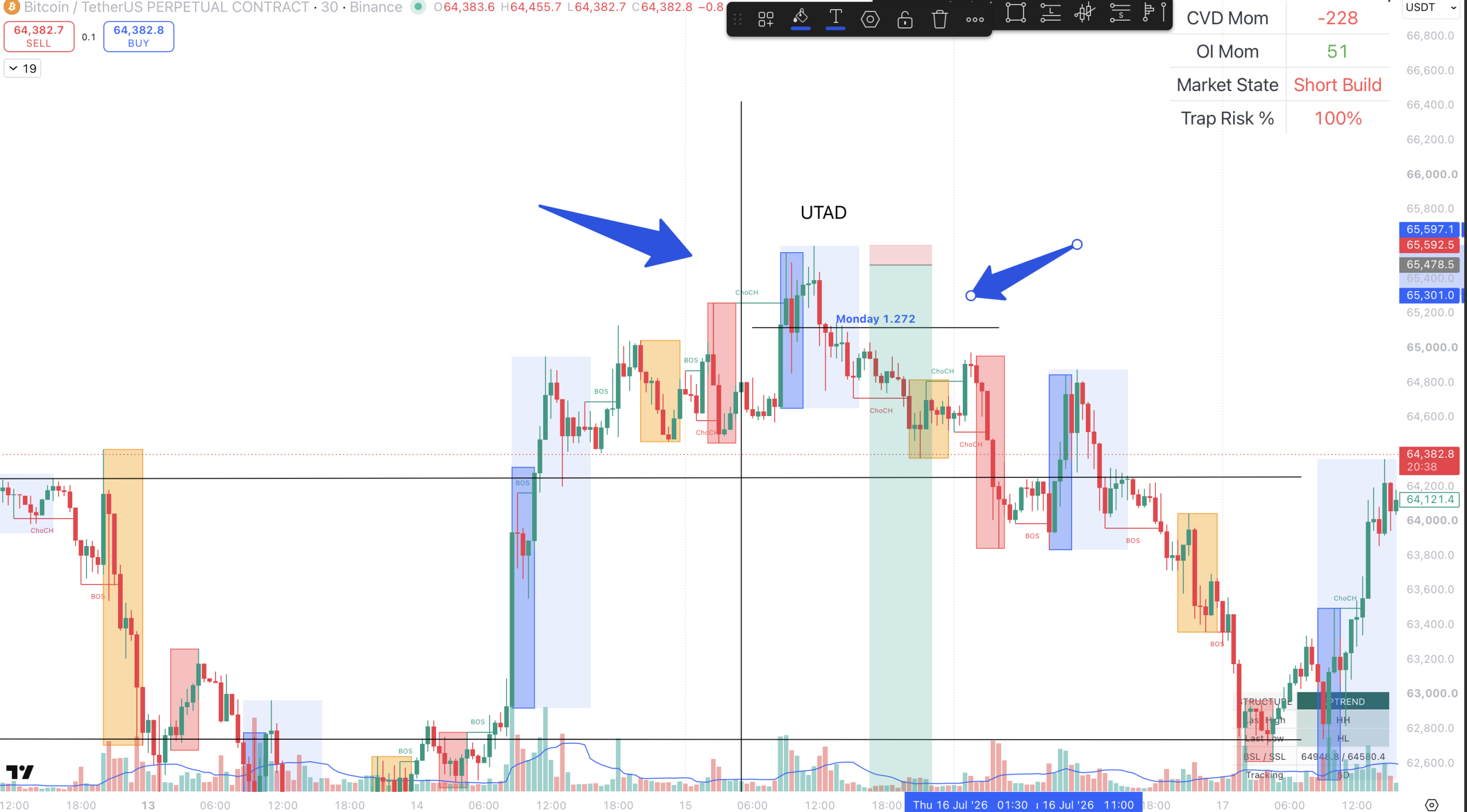
BOS vs CHoCH vs Market Structure Shift: What Actually Confirms a Trend Change?
BOS and CHoCH are not automatic entry signals. This StructFirst guide explains how location, liquidity, displacement, retests, and failure logic determine whether a structural break is meaningful or merely market…
-
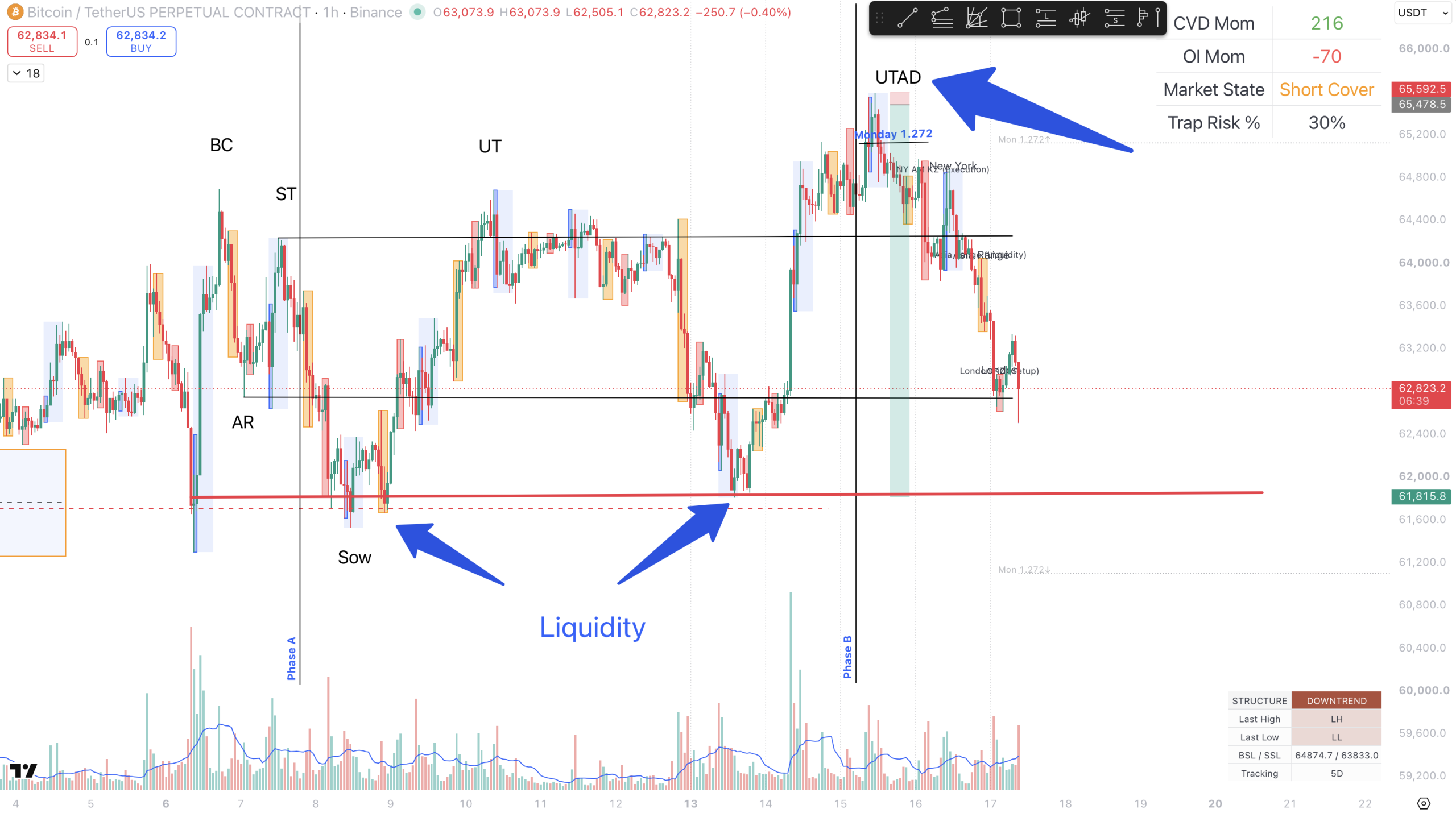
What Is a Liquidity Sweep? Confirmation, Failure, and Execution
A liquidity sweep occurs when price trades through an identifiable pool of resting orders—often above a prior high or below a prior low—before either rejecting the level, accepting beyond it,…
-
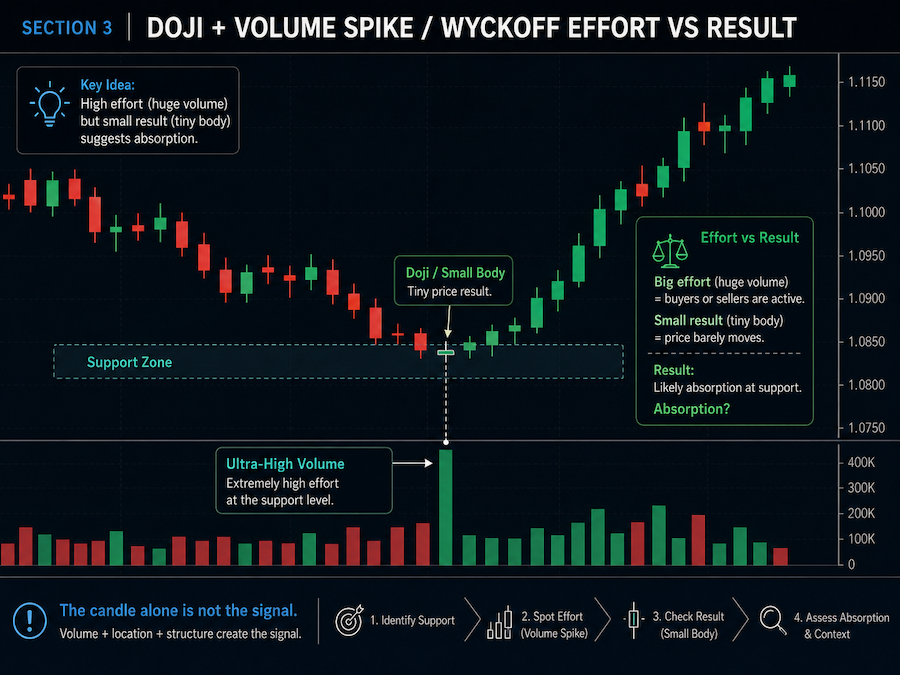
How to Read Candlesticks: Liquidity, Volume, and Market Structure
Most traders learn how to read candlesticks by memorizing pattern names. A long lower wick becomes a hammer. A long upper wick becomes a shooting star. A large body becomes…